
Best Practices for Formatting Reiki Articles
Well-formatted Reiki articles are easier to read, accessible to more participants, and more likely to be found through search engines. Following a few simple practices ensures your content is clear and navigable. These practices are also great to use in the formatting of your Dragonfly profiles or own personal websites.
Use Clear Headings
Headings help organize your content and guide readers through the article. They make it easier to skim, support screen readers, and help search engines understand the structure of your content.
In the GHL blog editor, you can select the type of text from a dropdown menu that defaults to “Paragraph.” This is where you can choose between different heading levels.
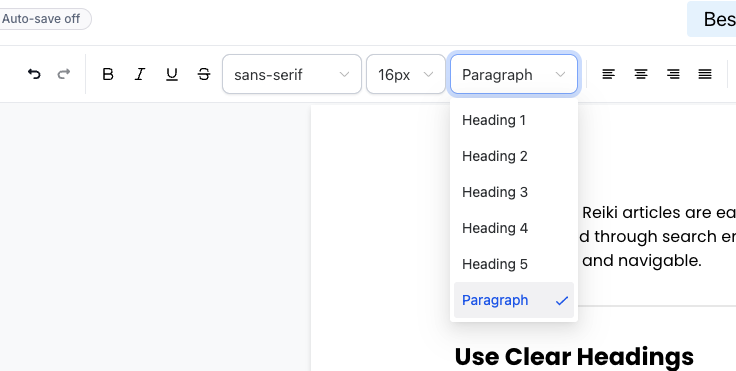
Heading Levels and Their Uses:
Heading 1 (H1): Usually reserved for the main title of your article. Use this only once per article.
Heading 2 (H2): Ideal for main sections within your article, like “Use Clear Headings” or “Keep Paragraphs Short.”
Heading 3 (H3): Good for subsections or points within a main section, such as “Heading Levels and Their Uses.”
Heading 4 (H4) and beyond: Rarely needed, but can be used for additional layers of subpoints if necessary.
By using headings thoughtfully, your article becomes structured and easier for participants to read and navigate, while also ensuring that assistive technologies like screen readers can follow the content correctly.
Keep Paragraphs Short
Try to keep paragraphs to two to four sentences. White space improves readability on both desktop and mobile devices and makes it easier for assistive technologies to process the text.
Organize Key Information
When helpful, use short bulleted or numbered lists to clarify points or steps. For example:
Highlight essential terms with bold text
Provide step-by-step instructions when needed
Keep lists concise so they remain readable
Lists help participants quickly identify important information and make content easier to navigate.
Include Links and Visuals Thoughtfully
Include links to related articles, sessions, or resources as needed. Images or screenshots can illustrate concepts, but always add descriptive alt text so visually impaired participants can access the information. This also helps search engines understand your content.
Proofread Before Submitting
Check for spelling, grammar, and readability. Reading aloud can help confirm that sentences flow naturally and are easy to follow. Proofreading ensures your article is clear and accessible for all readers.
Why These Practices Matter
Proper formatting makes articles readable, accessible, and discoverable. It benefits participants with disabilities, supports search engines, and ensures your content reaches as many people as possible.
Conclusion
By using clear headings, short paragraphs, concise lists, descriptive visuals, and careful proofreading, your Reiki articles become easier to read and navigate. These formatting choices help participants access and engage with your content efficiently. At the same time, these are only best practices for formatting — you should always feel free to write and structure your article in the way that feels energetically guided to you. Your voice and approach are yours to express.